Blog/Physiotherapy
The most common sports injuries in Amsterdam (and what to do about them)

The most common sports injuries in Amsterdam (and what to do about them)
Amsterdam is a city that loves to move. Early in the morning, the first runners are already out in the Vondelpark, the Amsterdamse Bos is full of trail runners and cyclists, and the gyms in Oud-Zuid are packed in the evening. And then there’s the daily cycling through the city. If you’ve just moved here, that alone can feel like quite a workout at first.
That’s great, but it also means we see athletes with injuries at our practice on the Emmaplein every week. From the beginner runner who started a little too enthusiastically, to the road cyclist with knee pain and the CrossFitter with a sore shoulder. The good news: most sports injuries respond well to treatment.
Even if you “only” play sport for fun
Many people think help with a sports injury is mainly for top athletes. That’s not the case. The runner who does a lap of the Vondelpark three times a week gets the same kinds of injuries as a competitive runner. The difference is in the amount of training, not the type of complaint.
Many recreational athletes also have a desk job. If you barely move during the day and then train hard in the evening, it pays to build up gradually.
Stopping completely usually isn’t the answer
When you get injured, the first instinct is often to stop everything until it’s better. In the first few days after an acute injury, taking it easy is sensible. But after that, long periods of rest often work against you. Your muscles get weaker, your joints stiffer and your fitness drops. Exactly the things that make getting back harder.
Most sports injuries also don’t come from one wrong movement, but from overload. And in that case, rest just postpones the problem. Take a break and the pain fades. But the cause, such as building up too fast, a lack of strength or technique that isn’t quite right, doesn’t change by sitting still. As soon as you start again, the pain comes back. A better approach: keep moving in an adapted way, tackle the cause and then build up gradually.
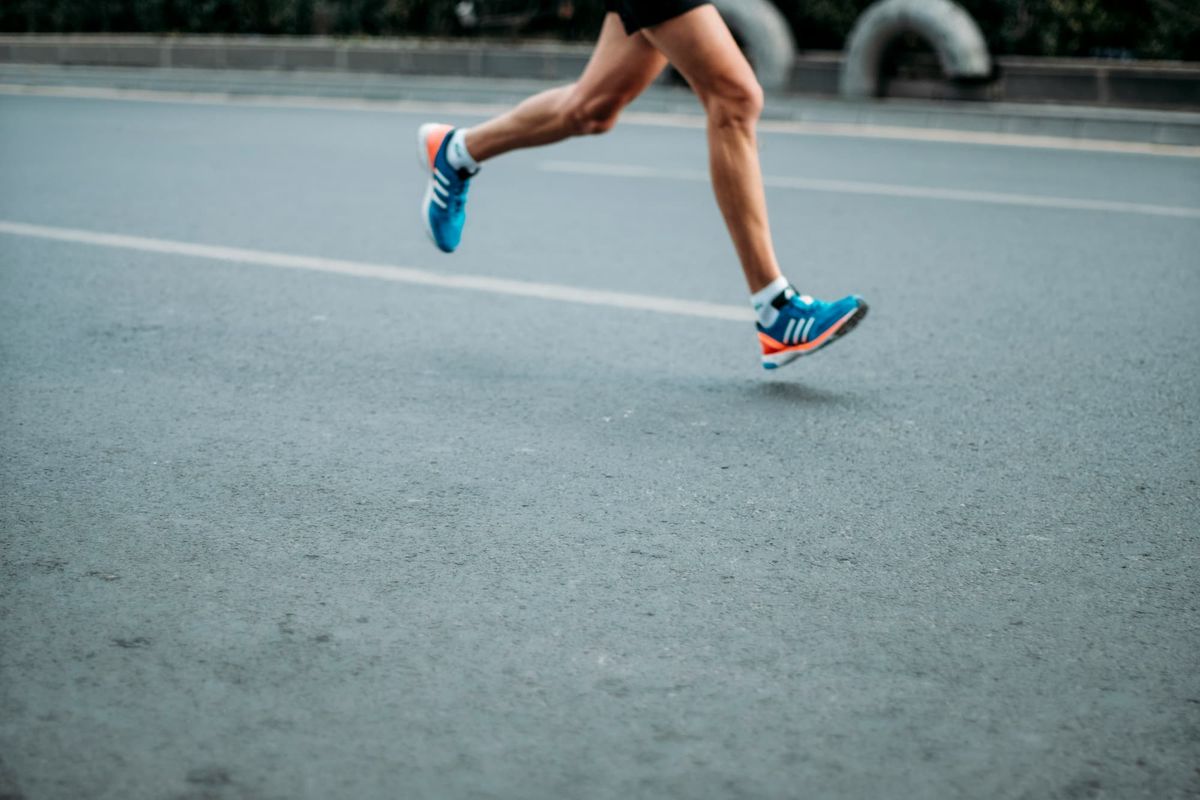
Running injuries
Running is one of the most popular sports in Amsterdam, whether in the Vondelpark, the Amstelpark or along the Amstel. It’s also a sport where injuries are common.
- Runner’s knee. The complaint we see most often in runners: pain around or behind the kneecap, especially on stairs, when squatting or after sitting with your knees bent for a long time. The cause often isn’t in the knee itself, but in a lack of strength in your hip and glute muscles. Your knee ends up absorbing what your hip should be doing. Strength training for your hips and glutes, combined with temporarily lighter training, usually works better than rest alone. Then build up again slowly: many runners use the rule of thumb of adding no more than about ten percent per week.
- Achilles tendon pain. Pain and stiffness in the Achilles tendon, a few centimetres above your heel, often with the first steps in the morning. The tendon reacts to overload: adding kilometres too quickly, too little recovery or shoes that don’t suit you. Calf exercises where you lower yourself slowly and with control work well. But tendon problems need patience. Full recovery often takes a few months.
- Shin splints. A nagging pain on the inside of your shinbone, during or after running. We often see this in people who have just started running, or who increase their training too quickly. Running a bit less for a while, strengthening your calf and foot muscles and looking at how you run are the basis of recovery.
- Hamstring injuries are also common in runners, especially during sprints and interval training. Read more in our article on hamstring injuries.
Cycling injuries
In Amsterdam, you cycle almost everywhere. That’s healthy, but a bike that isn’t set up properly can cause complaints, especially if you also go road cycling in your free time.
- Lower back pain. The forward-leaning position puts a lot of demand on your lower back, especially with handlebars that are too low, a saddle that’s too high or a weak core. Start with your bike: are your saddle height, handlebar height and reach right? Core strength training will then take the strain off your lower back in the long run.
- Knee pain. The complaint cyclists mention most. If your saddle is too low, you bend your knee too far with every pedal stroke. Too high, and you overstretch it. Too many kilometres in a short time, or a lack of strength in your thighs and hips, can also play a role. A good bike setup, stronger leg and glute muscles and a gradual build-up usually solve it.
- Neck and shoulder complaints. Hours of leaning forward with your head up quickly creates tension in your neck and shoulders. Raising your handlebars, changing hand position more often and strength training for your shoulders and neck all help.
Gym injuries
Strength training is one of the best things you can do for your body. You get stronger, your bones and tendons become more robust and you’re less likely to get injured in other sports. If things do go wrong in the gym, it’s usually not the exercises themselves, but the technique or wanting to go heavy too quickly.
- Shoulder complaints. Your shoulder is the most mobile joint in your body, which also makes it one of the most vulnerable. Problems often come from pressing too heavy overhead, or from technique that isn’t quite right yet. Work on your technique, build shoulder stability, keep a good balance between pushing and pulling exercises and give yourself enough recovery. More on our page about shoulder pain.
- Lower back complaints. Deadlifts, squats and kettlebell swings are great exercises, but with poor technique or too much weight, your lower back can take a beating. Learn the movement properly first, build your core strength and only then add weight gradually. More on our page about back pain.
When should you see a physiotherapist?
For a minor strain or muscle soreness after a hard session, taking it easy for a bit is often enough. But book an appointment if:
- the pain hasn’t clearly improved after one or two weeks
- swelling isn’t going down
- the pain comes back every time you train
- a joint feels unstable
- you can’t move as well as before and it isn’t improving
- the pain gets in the way of your daily life
- you want to build back up to sport after surgery
Did you take a heavy knock, can you no longer stand on your leg, is the joint swollen and unstable, or did you feel something snap? Then see your GP or the emergency department first, so they can check whether anything is broken or torn.
How we work
An appointment with us always lasts an hour. The first time, we start with a thorough conversation about your complaint, your sport, how you train and what your goal is. Then we look at how you move, test your strength and mobility and look at the movements from your sport. That way we see not only where it hurts, but also why.
We build up your recovery in three steps:
- Starting gently. We look at what your body can handle right now and make sure you keep moving without making the complaint worse.
- Restoring strength and mobility. With targeted exercises and strength training in our own gym. This is usually the longest phase, and also the most important.
- Back to your sport. We build up to what your sport asks of you: speed, jumping, turning, braking. Only when you can do that pain-free and with confidence are you ready.
All our physiotherapists are also personal trainers. That’s why we don’t stop at pain-free, but at ready to play again. And because we’re right next to the Vondelpark, it’s easy to drop by after your training.
Frequently asked questions
- Can I keep training with an injury?
It depends on the injury. You can often keep moving in an adapted way, and that’s usually a good thing. We’ll give you clear advice on what you can and can’t do. - How long does it take to recover from a sports injury?
That varies a lot per injury and per person. A minor strain is often fine within a few weeks, while a tendon problem or recovery after surgery can take months. After the first assessment, we can give you a more realistic picture. - Do I need a referral?
No, you can book an appointment directly without a referral from your GP. - Is it covered by insurance?
We don’t have contracts with health insurers. You pay the invoice yourself and then submit it to your insurer. Depending on your supplementary insurance, you’ll get some or most of it back. - I’ve had knee pain since I started running. What now?
That’s very common in beginner runners, and it’s usually because they built up too quickly. Run a bit less or slower for a few days, then build up gradually again. If the pain stays or keeps coming back, have it checked before it turns into a long-term problem.
Frequently asked questions
Dat hangt af van het type en de ernst. In veel gevallen kun je alternatieve activiteiten doen die het geblesseerde gebied niet belasten. Een fysiotherapeut adviseert je over wat wel en niet kan.
Niet per se, maar neem de klachten serieus. Kniepijn bij beginnende hardlopers komt vaak door te snelle opbouw. Verminder tijdelijk je volume en laat je lopen analyseren. Als de pijn aanhoudt, maak een afspraak bij ons.
Een lichte spierblessure kan in een tot twee weken herstellen. Peesklachten duren drie tot zes maanden. Een goede diagnose en vroeg starten met behandeling verkorten de hersteltijd aanzienlijk.
Nee, in Nederland kun je zonder verwijzing bij ons terecht. Maak direct een afspraak — we kunnen vaak op korte termijn helpen.
Zwemmen en fietsen zijn relatief laag in blessurerisico omdat ze gewrichtsvriendelijk zijn. Krachttraining onder goede begeleiding is ook veilig en bovendien beschermend tegen blessures in andere sporten. Het gaat niet om welke sport je kiest, maar hoe je die opbouwt en uitvoert.
- sports injuries
- amsterdam
- running
- cycling


